
About transmission steering
When a direct link from the rudder to the pedestal via a rack and pinion system isn’t possible, the best, most direct and strong mechanical steering system to go for is often a Jefa transmission steering system. In some cases a combination of wire system and transmission parts can be used.
The transmission steering is based on the same principals as the rack and pinion system; the rotation of the wheel is transferred to a push pull movement via a gearbox and levers. The difference from the rack and pinion system is that the distance from the wheel to the rudder shaft can be much bigger and the routing more complex. The available reduction gearboxes also allows transmission systems to fit on a wider range of yachts.
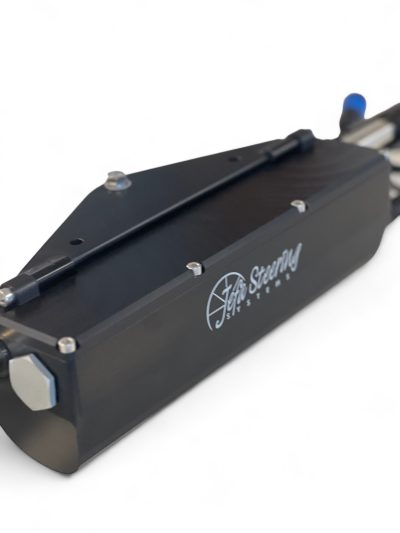
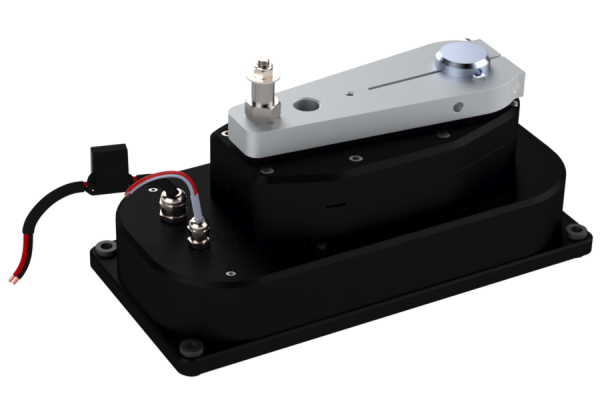
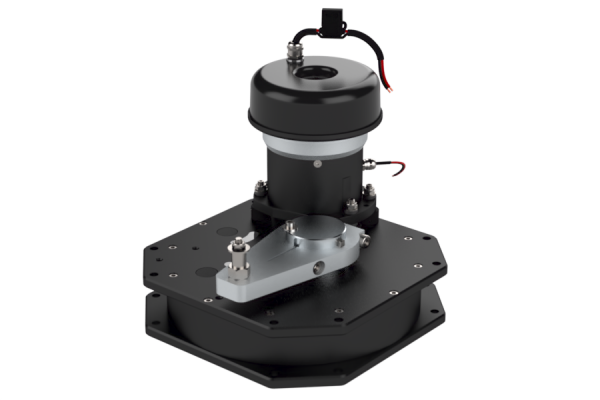
Via torque tubes, universal joints, and bevel gearboxes, the rotating movement is transmitted to the reduction gearbox next to the rudder shaft. The reduction gearbox transfers the rotating movement into a push and pull movement on the tiller lever. All rotating parts are running in ball bearings, to allow the system to be back driven by the rudder, the result is a steering system which can be far away from the rudder, but with the same precision and feel as a tiller steered boat.
The principle advantage of the transmission steering system over cable steering systems is the fact that the rudder torque is reduced by the reduction gearbox with a certain factor (between 5 – 13 on 10 series systems, and 17 – 23 on 20 series systems, depending on the chosen gearbox). The gearbox may be positioned where it fits best, and transfers the rotation to the rudder with a push-pull draglink. This requires less space around the rudder. As the bevel gearboxes and reduction gearboxes are connected via universal joints and torque tubes, installation precision is less strict which eases the time of installing the system. All mechanical components of our transmission systems has been greased for life to reduce future maintenance of the system.
Another advantage is the proportional reduction of the transmission steering compared to the linear reduction of cable systems. The transmission system has less advantage at midships and more at full rudder.
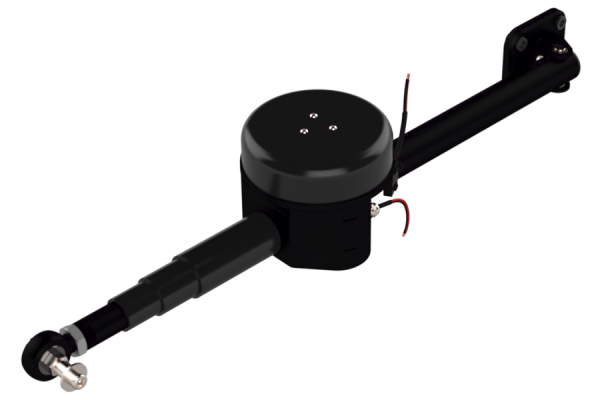
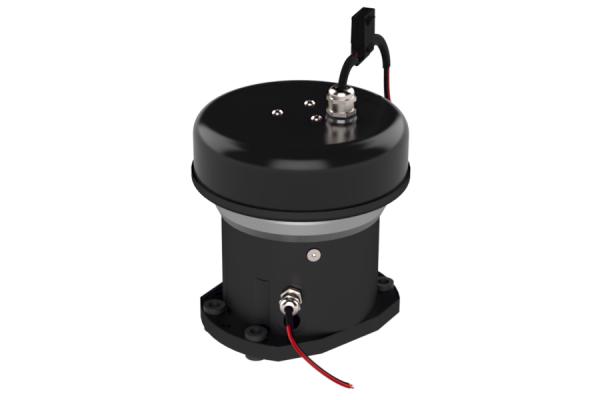
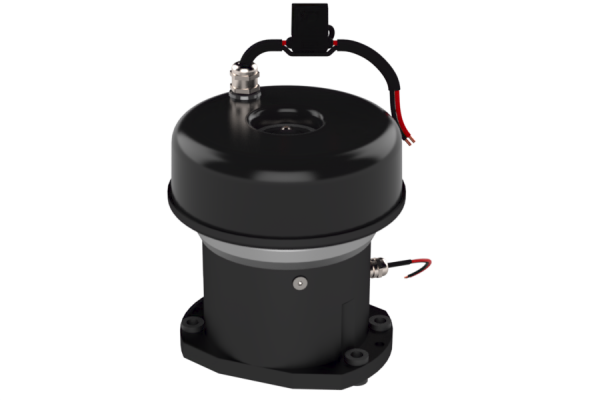
Our transmission drive units for autopilots can be integrated in the system on every bevel gearbox or flat reduction gearboxes.
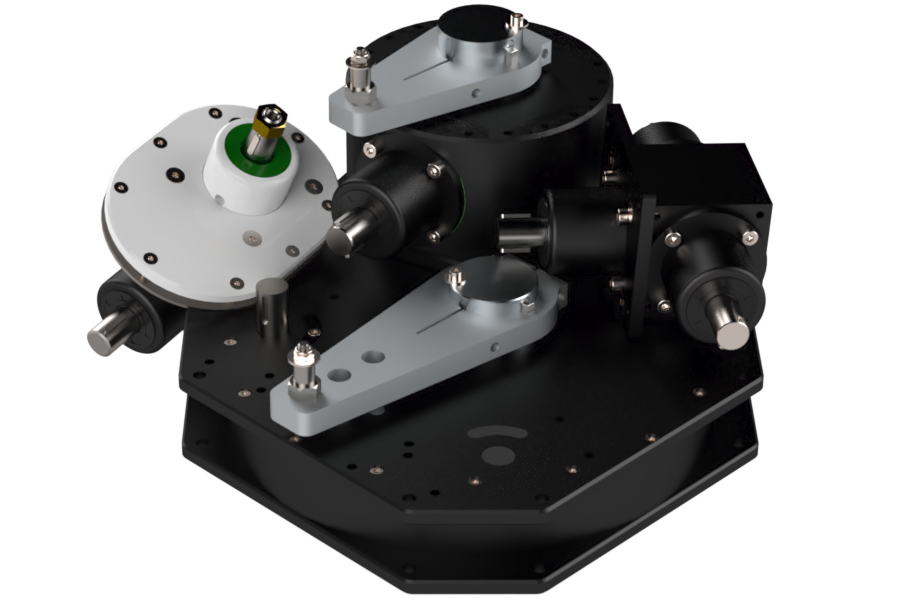
Example of a transmission steering systems
Please follow this link to our Examples page to view several options of working systems. Here you can search and sort to find a solution that might fit your project.
Wide Angle Geometry:
The lever geometry of the Jefa transmission systems is based on the principle of Wide Angle Geometry. This results in a direct steering at midships (where the loads are low) and a more indirect and powerful steering at full rudder (where the loads are maximal). This effect is achieved by an unequal length of the output and tiller lever. The output lever has 130 mm centres and the tiller lever 200 mm. The diagram below shows the mechanical advantage (lever reduction) in relation to the rudder angle. Around midships the reduction is quite constant, and at full over the mechanical advantage nearly doubles compared to the midships advantage. To setup wide angle geometry you set the levers perpendicular to the draglink while in midships position.
| Rudder Angle | mech. advantage |
| 0° | 1.54 |
| 5° | 1.54 |
| 10° | 1.56 |
| 15° | 1.60 |
| 20° | 1.67 |
| 25° | 1.78 |
| 30° | 1.99 |
| 36° | 2.50 |
Art. 11458